Presented by Phuket Local Connect
Supported by TAT Phang Nga



Education Fam Trip
Phang Nga Living Classroom — Follow the Water. Understand the Andaman.
29–30 August 2026·15 schools·30 school representatives
Two days of reading one landscape closely — from an inland stream to the Andaman coast — so that teachers can bring the method, not just the memory, back to their classrooms.
- Organised by
- TAT Phang Nga × Silver Hawk Group
- Learning platform
- Phuket Local Connect
- Learning approach informed by
- Bioregioning in Practice 2.0 / Gaia Education
Organised and implemented by TAT Phang Nga and Silver Hawk Group. Phuket Local Connect is used as the learning platform for observation, photos and reflection.
Informed by learning from Gaia Education's Bioregioning in Practice 2.0. This programme is not certified, endorsed or accredited by Gaia Education or TAT.
Why Phang Nga?
Phang Nga is the classroom
Mountains, catchments, streams, farms, communities and coast sit close enough to be read in two days.
Phuket is where the learners come from
Teachers travel from Phuket and return with a method their students can use at home.
The Andaman is the system
Phuket, Phang Nga and Krabi are neighbouring Andaman-side landscapes within the broader Southern West Coast basin context.
We are not following one single river; we are learning how Andaman-side water systems connect mountains, people, food, coasts and sea.
Follow the water
One thread runs through every stop
- 1Rain
- 2Mountain
- 3Stream
- 4Community
- 5Farm
- 6Coast
- 7Andaman Sea
Itinerary
29–30 August 2026
Day 1 · 29 August
08:00
Meet at Central Phuket
08:30
Depart — snacks on the bus
10:30
Arrive Lam Kaen — Manoot Bamboo Rafting: bamboo planting, selecting and cutting bamboo, tying bamboo rafts
Open the learning card11:30
Bamboo rafting
Open the learning card12:15
Khanom A-Pong workshop
12:45
Depart for Mun / Man Pochana
13:00
Lunch
Open the learning card14:00
Sea Turtle Conservation Center, Phang Nga Naval Base — conservation learning and turtle release
Turtle release is subject to the centre's approval and readiness on the day.
Open the learning card15:30
Depart for Wat Suwan Khuha
16:30
Arrive Wat Suwan Khuha — geology, cave, place and culture
Open the learning card17:00
Depart for Borsaen Villa
17:30
Check-in
18:30
Dinner
19:30–22:30
Astronomy & Night Sky Observation — Expert-led: (1) Introduction to Astronomy, (2) Fun with Science — STEAM Show, (3) Sky Observation App, (4) 5-Metre Moon Check-in, plus the PLC night reflection
The astronomy session is led by astronomy experts, with PLC supporting the learning journey and reflection. On this night the Moon is nearly full (about 99.7% illuminated, rising ~19:24 in the east) and there is lighting around the venue, so the sky is bright and faint stars are harder to see — an ideal chance to learn about Moon phase, sky brightness and observing conditions. We do not promise the Milky Way, planets, a meteor shower, dark-sky conditions or a telescope.
Open the learning card
Rain or cloud plan
If it rains or the sky is clouded over, the night session moves indoors: Stellarium on screen, night sound listening from a sheltered edge, a light-and-dark discussion, and the same PLC reflection. Nothing is cancelled.
Day 2 · 30 August
07:30
Optional Nature Healing — a quiet 30-minute nature walk, facilitated by Silver Hawk
—
Breakfast
09:30
Depart for Pu Chao Rice Mill
10:00
Bamboo varieties, rice milling, making khao lam, paddy field walk, mixed farming
Open the learning card12:00
Lunch
13:30
Return to Phuket — Education Fam Trip reflection and product discussion on the bus: what can schools bring back for students?
Field learning cards
One card per stop. Same five questions everywhere.
The cards are open to everyone. Saving your own answer to a stop is for registered trip participants.
02. Lunch — food as a way to read a place
03. Sea Turtle Conservation Center, Phang Nga Naval Base
04. Wat Suwan Khuha
06. Pu Chao Rice Mill
Stop 05 · Bor Saen Villa, Phang Nga
Bor Saen — stay, sky and living landscape
Bor Saen site map
A simple orientation of the public areas we use during the trip. Use it to find the group, not to navigate by GPS.
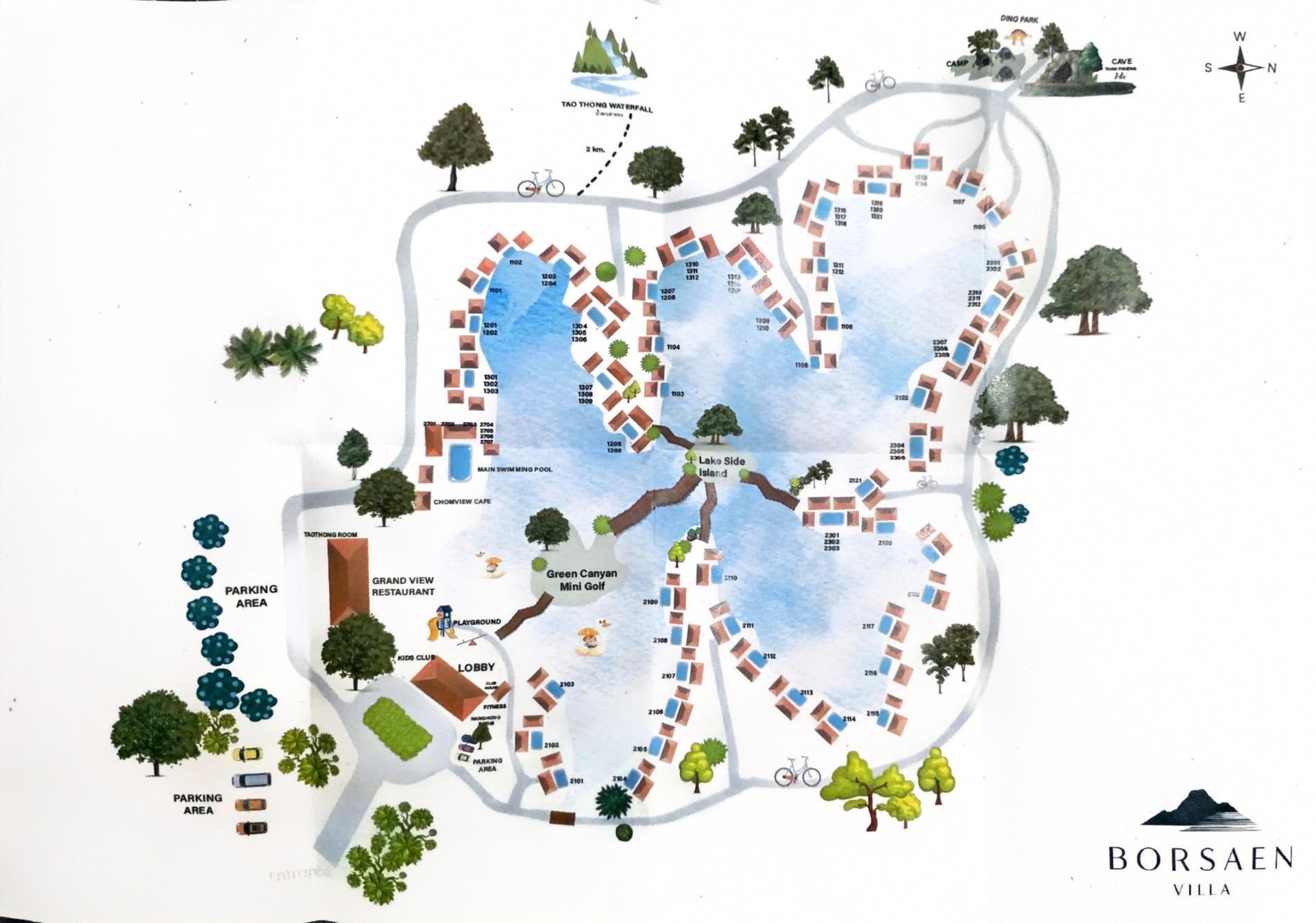
Lobby & reception
Arrival, check-in and the first gathering point on 29 August.
Dining / restaurant area
Dinner on Day 1 and breakfast on Day 2. Also the indoor fallback space.
General meeting point
Where the group gathers before each session. The organiser confirms the exact spot on site.
Night sky observation area
An open, level and safe area used for the 19:30 night session.
Paths & bridges
Walkways across the grounds. They are dimly lit at night — bring a phone light and walk slowly.
Parking
Coach drop-off and parking area.
Public landmarks
Pools, garden and open lawn areas used as orientation landmarks.
Where we gather
General meeting point
Confirmed on site by the organiser
Night sky observation point
Confirmed on site by the organiser
Directions are given in plain words by the facilitator on the day. PLC does not publish GPS pins for private accommodation areas.
Your stay
Room numbers are private. They are shown only to the registered participant they belong to, and to the organiser. They never appear in any public page, album or export.
Teacher album
Add a photo and what you noticed
Every submission is reviewed manually by an organiser before it can appear publicly. PLC does not scientifically verify unreviewed observations.
Bring it back to school
What would work for your students?
After the trip
Registered participants complete one post-trip evaluation. Group results and approved learning outcomes are published as aggregates only.
Sources and references
- Klook Manoot Bamboo Rafting activity listing
- TAT Media Assets Sea Turtle Conservation Center reference
- TAT Media Assets Wat Suwan Khuha reference
- Borsaen Villa Official accommodation website
- TOCA Community agri-tourism learning activity
- Gaia Education Bioregioning in Practice 2.0 — learning reference only
This page presents programme and learning information, not scientific measurement. This trip does not demonstrate or prove Nature Positive impact.
Learning platform & supporting partner